
River Road Bus Garage
River Road, Barking
London IG11 0DA
CONTRACT COMPLETION DATE 24th January 2025
Enabling Works and Demolition of Warehouse/Office Building B1 at Go-Ahead London’s River Road Bus Garage, River Road, Barking, London IG11 0DA
Spurred by an Ultra-Low Emission Zone from 2019, Transport for London (TfL) is working hard to improve the capital’s air quality. Go-Ahead London, the capital’s biggest bus company, is spearheading this transformation, and has converted their Waterloo Garage to full electric e-bus operation. Electric buses operate without tailpipe emissions, significantly reducing harmful pollutants such as nitrogen oxides and particulate matter. This transformation is particularly crucial for densely populated urban areas in the UK.
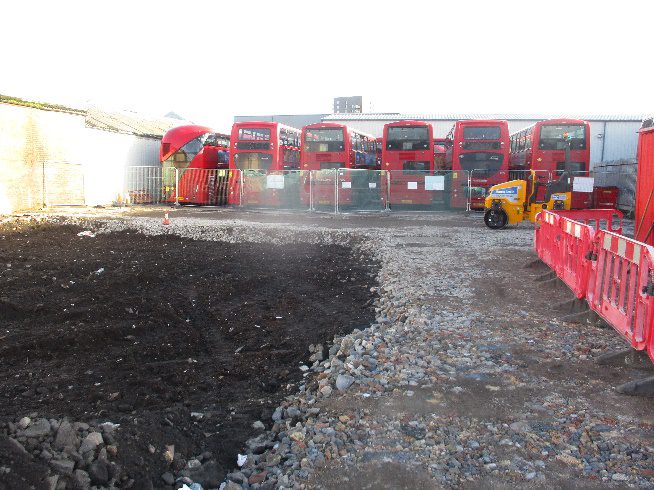
Work has commenced on a bus depot site in East London, Barking, to install new charging infrastructure for electric buses. The refurbishment proposal is split into several phases, with the enabling phase consisting of the demolition of an existing bus depot building (Building B1) and the replacement of approximately 1,000m2 of existing surface hardstanding to facilitate cables and other infrastructure to run underground from nearby transformers to proposed new charging points.
Dorton Demolition & Excavation Limited (Dde) was awarded the enabling phase demolition contract through competitive tendering.
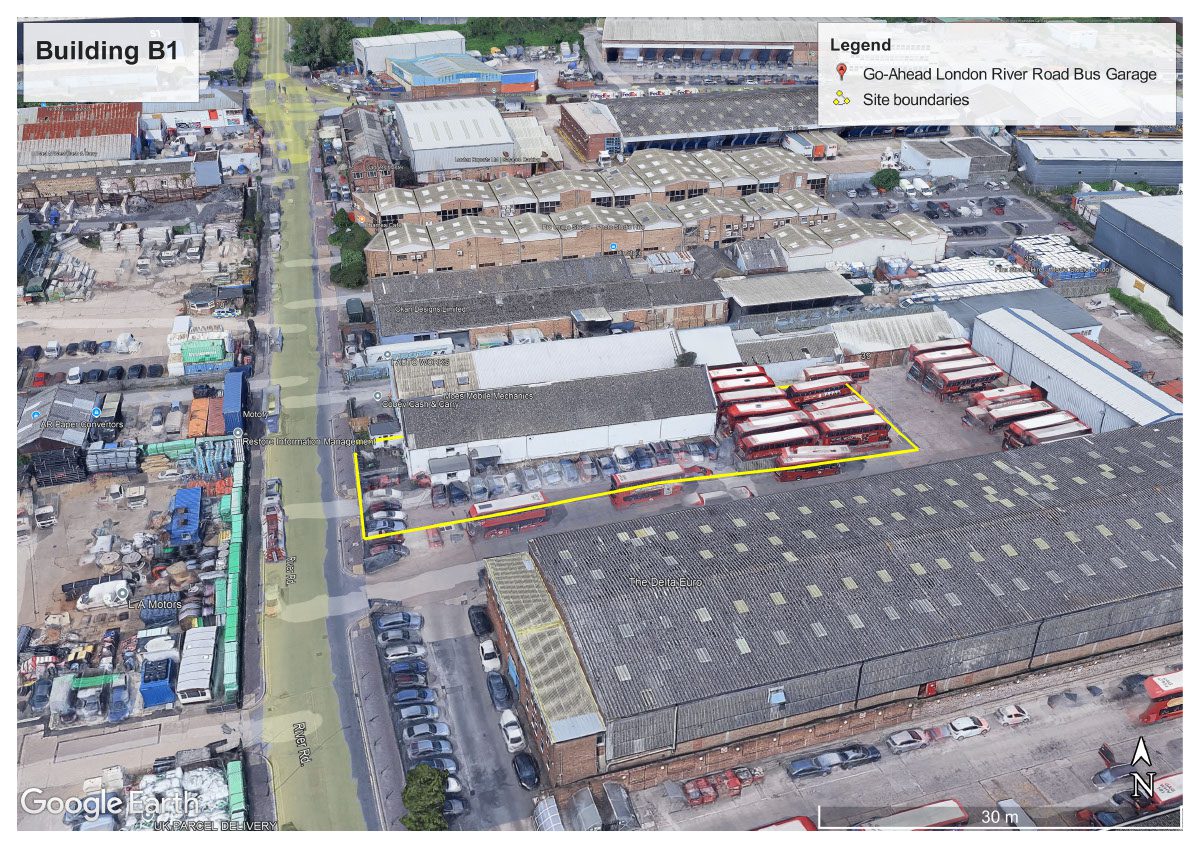
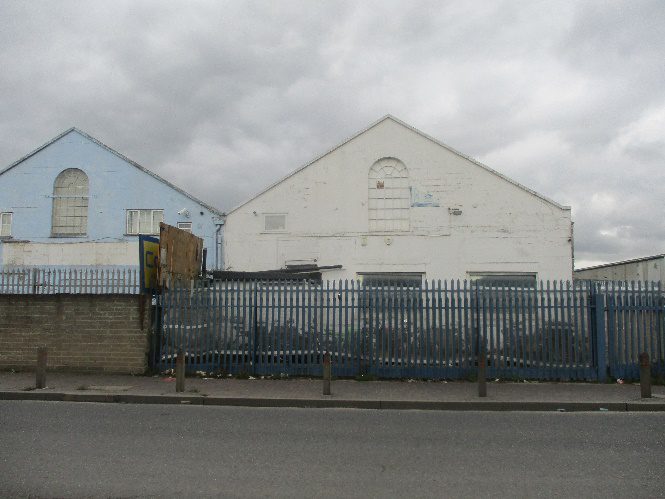
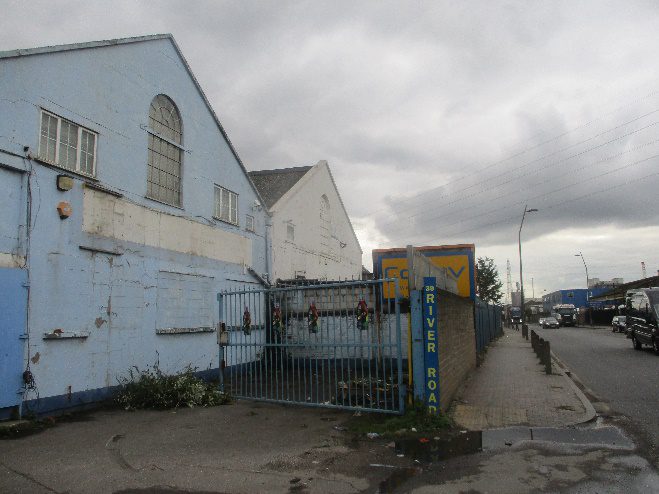
The 3D Google Earth image below shows the site bounded by a yellow line. The site shares a party boundary wall with 39 River Road to the north, a busy operational Go-Ahead bus depot to the south and east, and River Road to the west.
LHS (Light blue building): 39 River Road; RHS (Cream building): Building B1
Scope of works:
- Demolition of Building B1. Party wall is to be protected and retained.
- The removal and disposal of asbestos containing materials.
- Decommissioning and removal of mechanical and electrical installations.
- Protection of structures and services designated to remain.
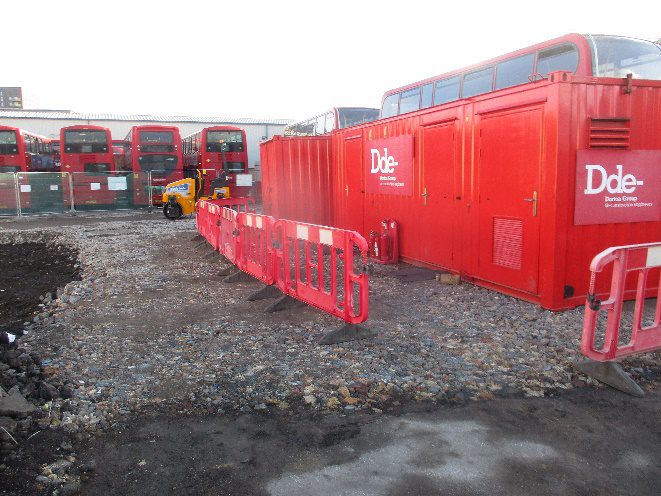
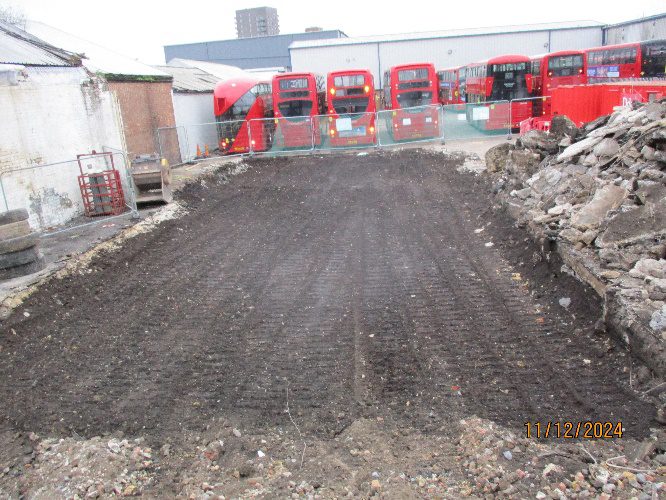
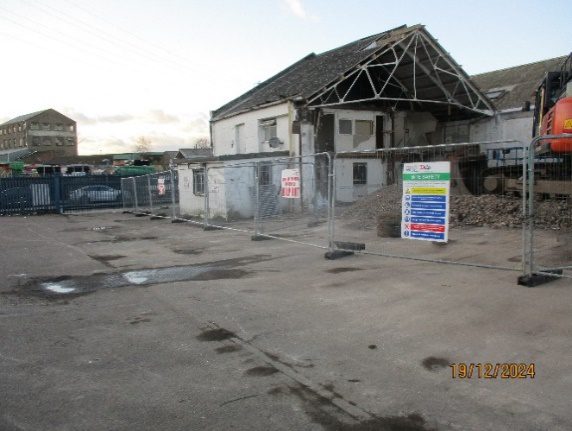
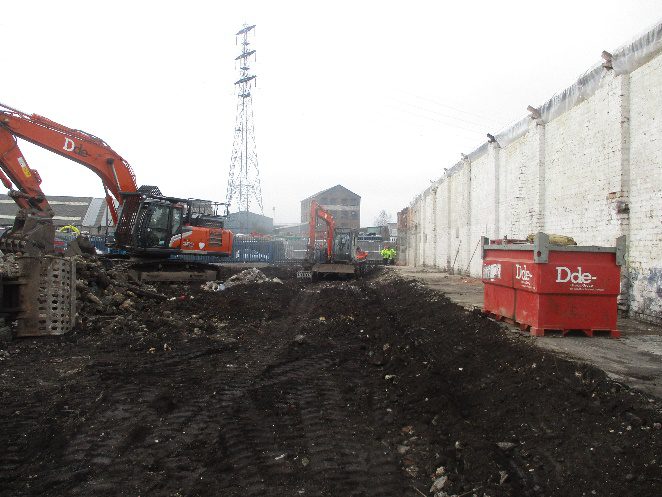
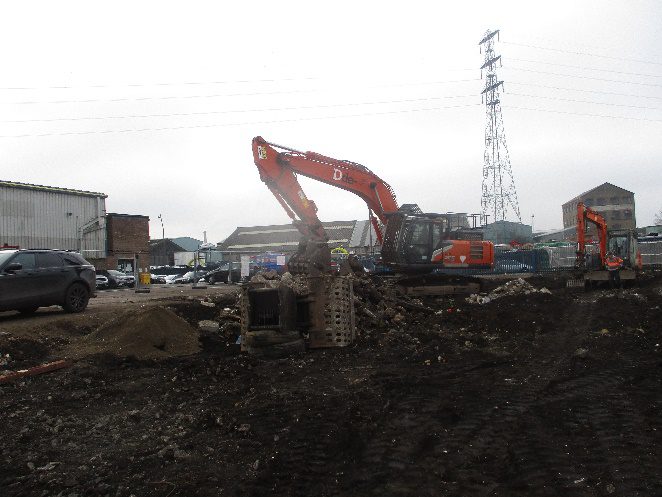
- Breaking out concrete and tarmac hardstanding. The yard is currently used as a parking area with overnight bus storage.
Key Challenges
- Delivery of the works to a busy 24-hour operating bus depot which required careful planning and execution to minimize disruptions to daily operations. Key strategies included splitting the project into smaller phases.Temporary reinstatement on completion of each phase of work was crucial to maintain the depot’s operational capacity. Regular communication and coordination between the project team, depot staff, and relevant authorities was essential for a seamless operation. Maintaining safety standards for both workers and depot staff was paramount throughout the project.

- 39 River Road is a party wall warehouse building trading in wholesale food and beverages. During the dismantling works, the valley gutter was uncovered filled with silt and vegetation. We attempted to clear the gutter, but it was severely corroded and in a poor state. A temporary solution had to be found to ensure that 39 River Road enjoyed a dry environment. December 2024 was a storm season with frequent disruption from strong winds and rain.
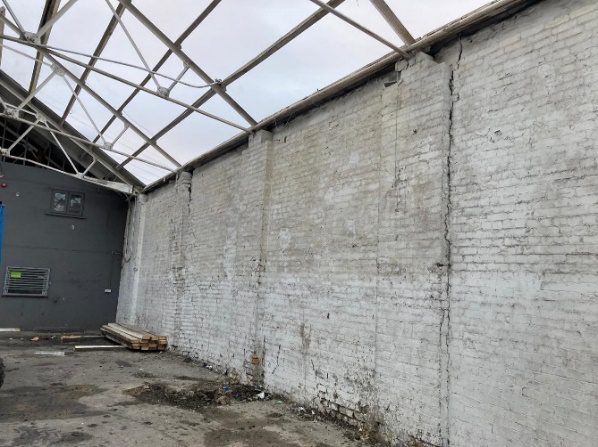
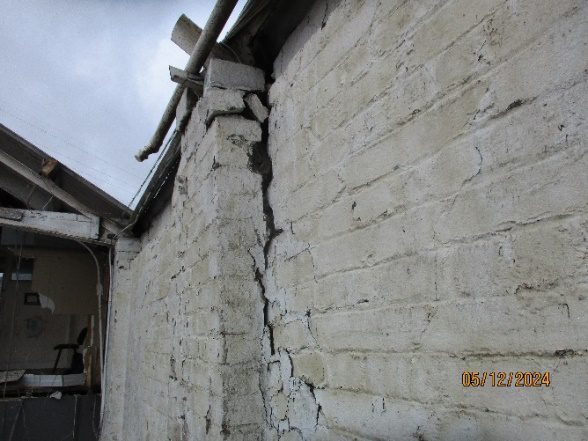
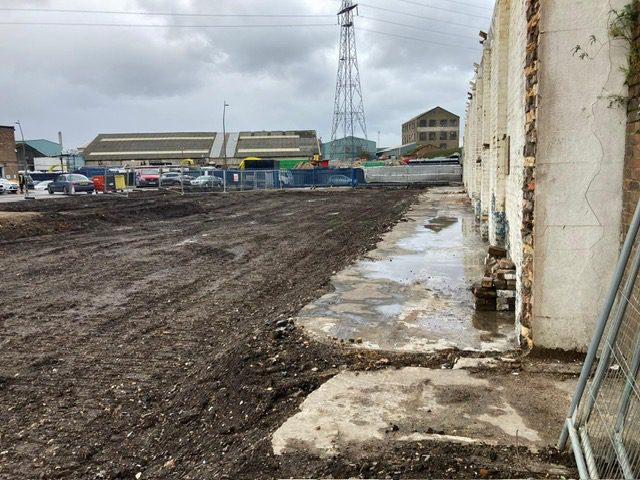
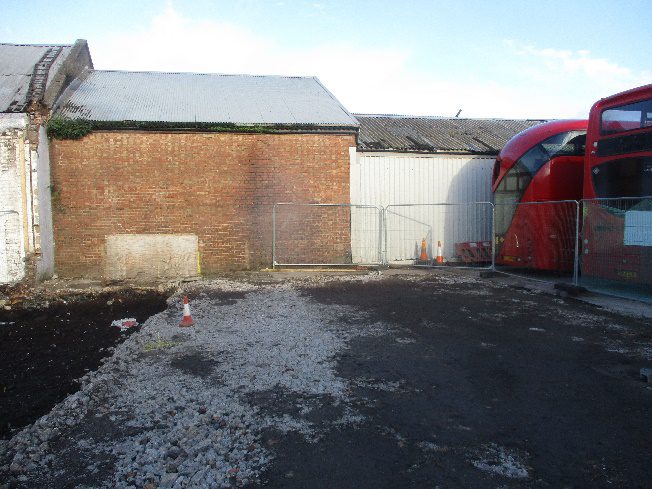
The gutter was overlaid with a continuous roll of DPM, dressed into existing downpipes. - The party wall’s condition, once exposed, appeared unstable. A structural engineer’s inspection was requested. A one-and-a-half-meter wide strip of concrete ground slab was retained to reinforce the wall. Repair work was scheduled for a later phase.
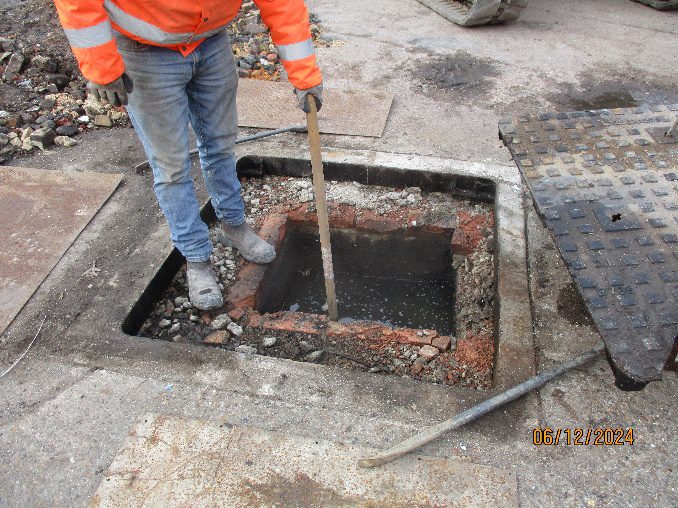
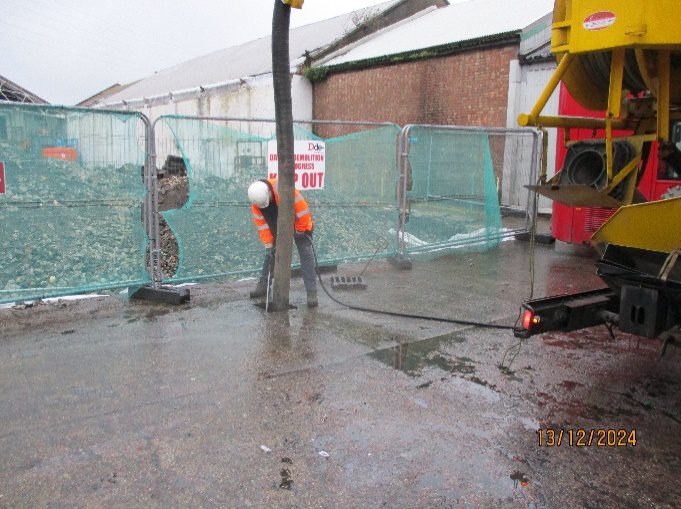
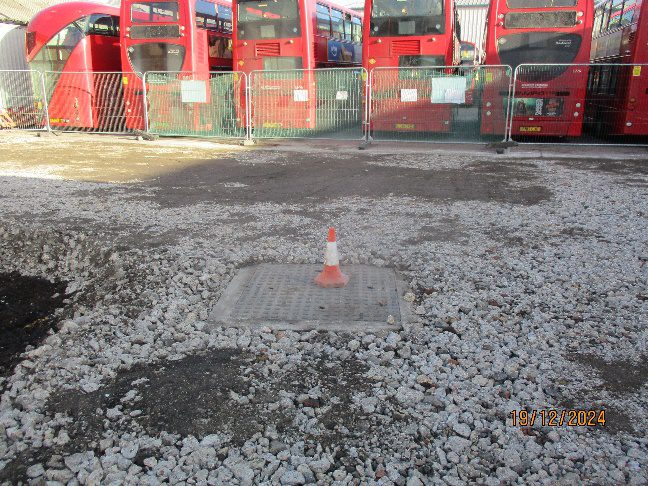
- A blocked manhole was uncovered at the southeast corner of Building B1. This manhole picked up surface water from surrounding gullies. A specialist Super Combi Jet Vacuum Unit emptied and cleared the blocked drain.
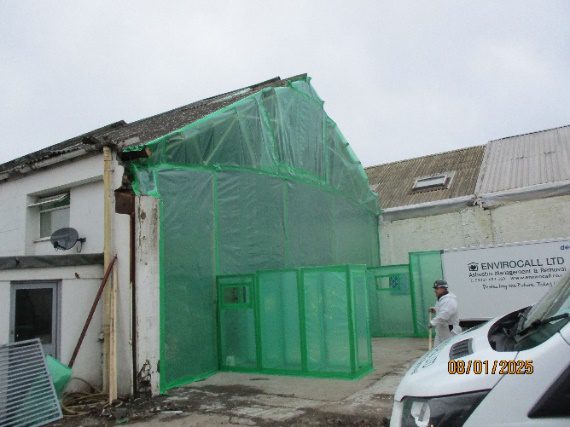
- Asbestos insulation board was discovered to high level trusses above the wall separating the warehouse from the office units of Building B1. The board was hidden in the interface between the warehouse and office units and not identified in the asbestos demolition survey. Work was stopped immediately and the area isolated to prevent further disturbance and potential exposure. The area was fenced off and warning signs put up to prevent others from entering the area. The client was immediately notified. The board appeared to be in a good and stable condition and deemed not a hazard if left temporarily undisturbed. The remaining portion of the partly demolished building was stabilised until a professional survey could be undertaken. The survey results positively confirmed the presence of amosite and chrysotile asbestos insulation board in the samples taken. A licensed asbestos removal contractor assessed the situation and safely handled the removal and disposal process.
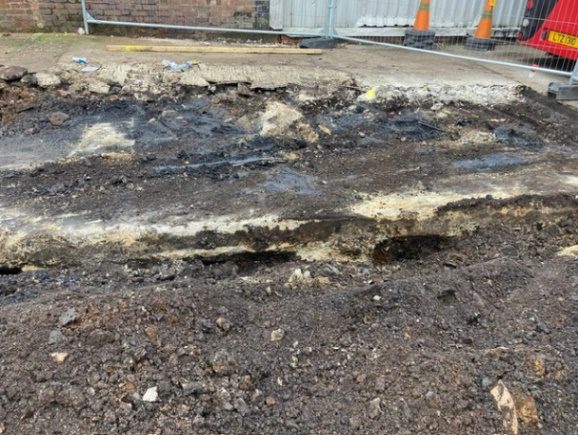
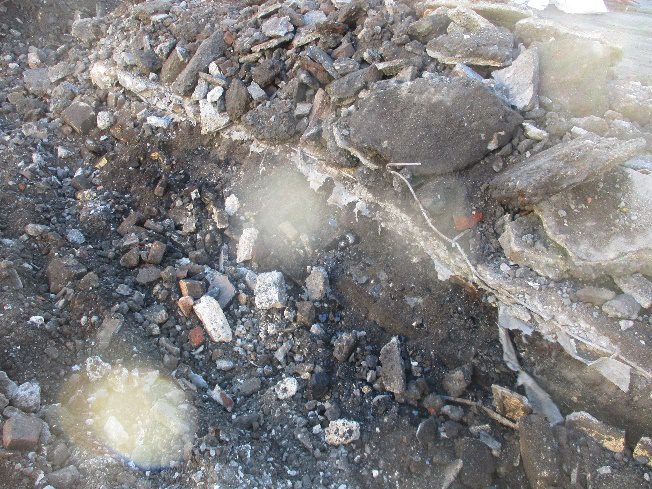
- Asbestos contamination was uncovered in the made-up ground and beneath a historic ground slab. The same precautionary and testing procedure was carried out as outlined above. A survey confirmed the presence of chrysotile asbestos cement.
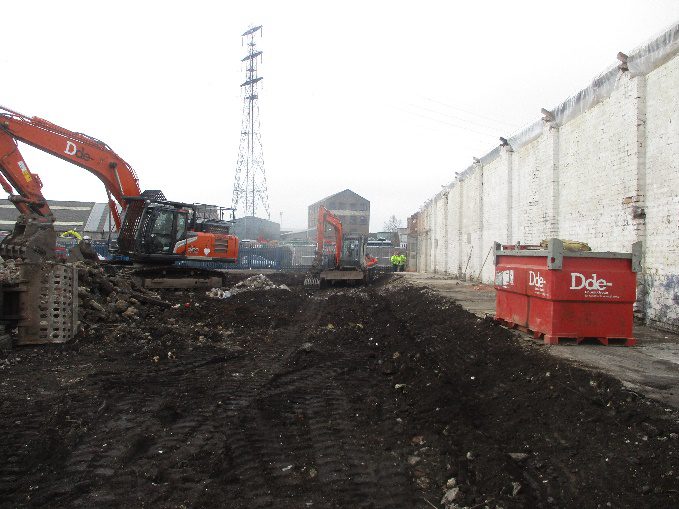
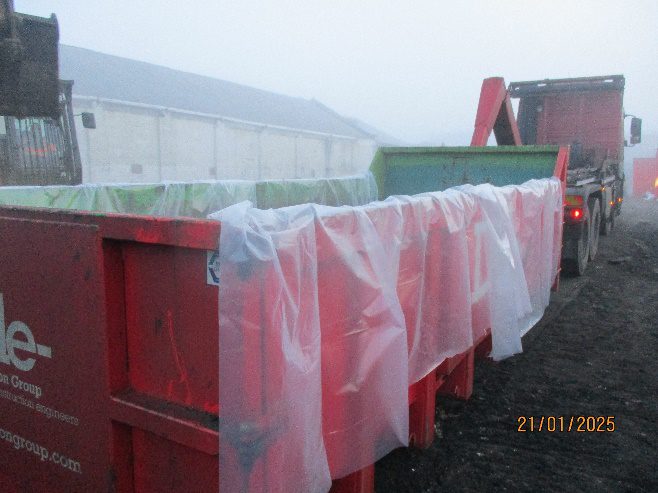
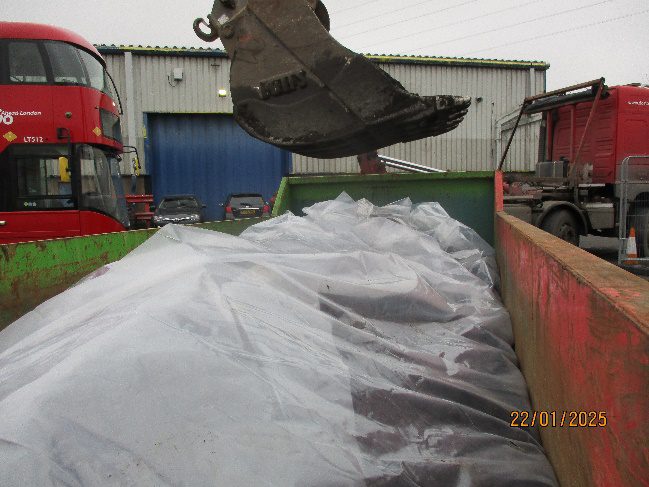
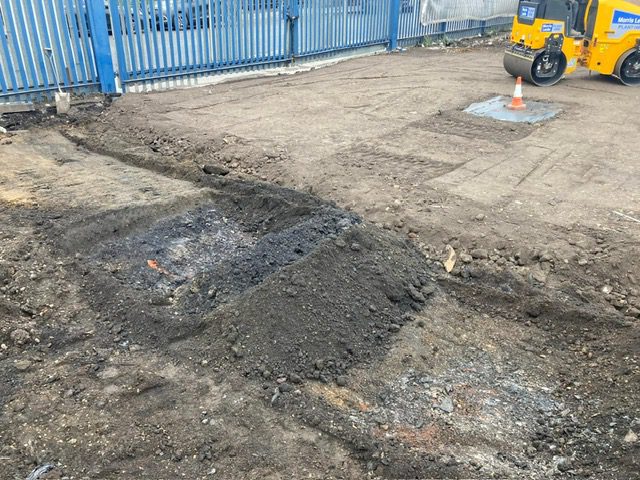
The asbestos cement contamination was site wide. The remediation option selected was ‘dig and dump’ due to the overarching need of yard space for bus storage. Proper handling and disposal of asbestos-containing materials was essential to prevent further contamination and protect human health. A pre-works risk assessment determined the appropriate control measures and procedures. Effective dust control measures were paramount to the operation. 85 tonnes of contaminated soil was removed from site.
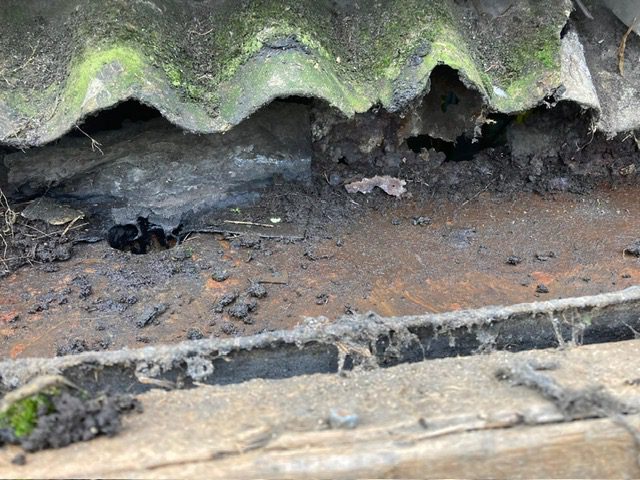
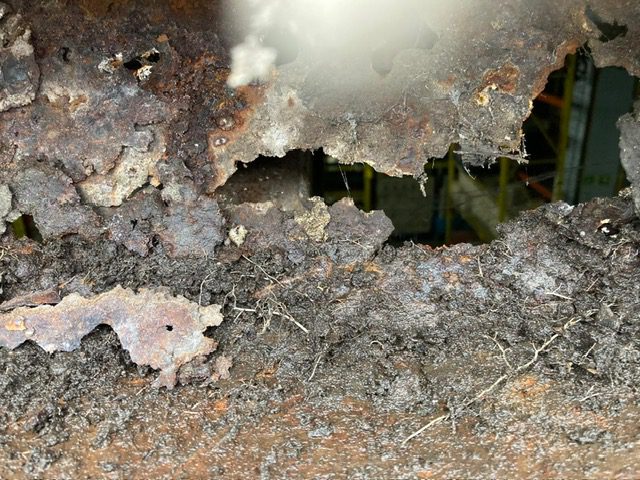
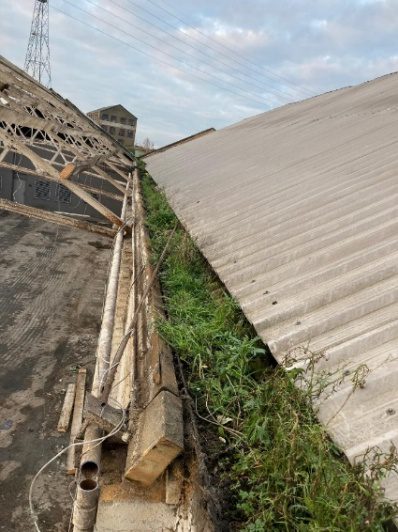
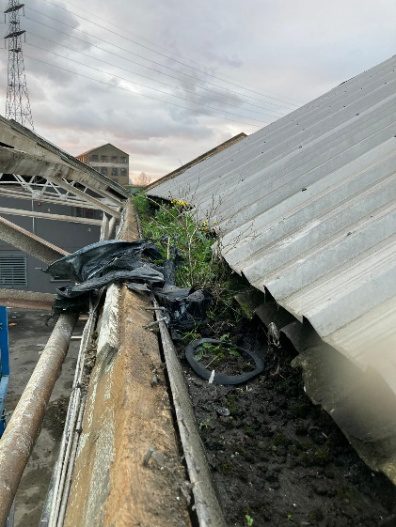
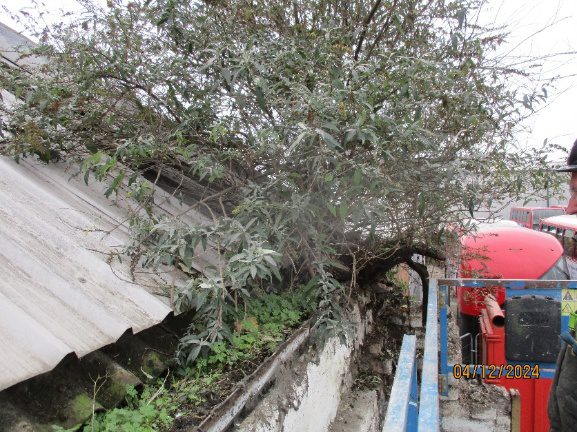 The gutter was overlaid with a continuous roll of DPM, dressed into existing downpipes.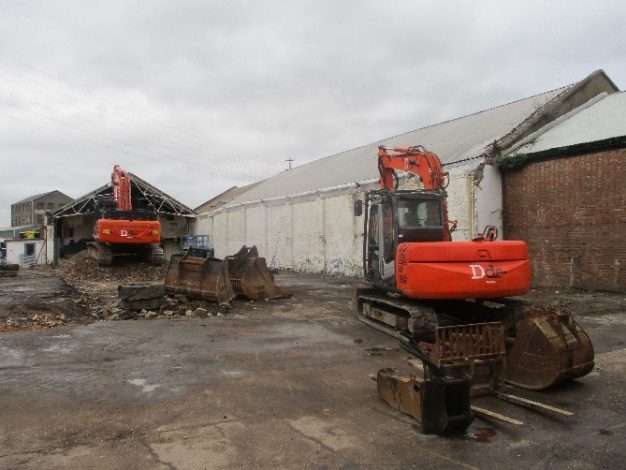
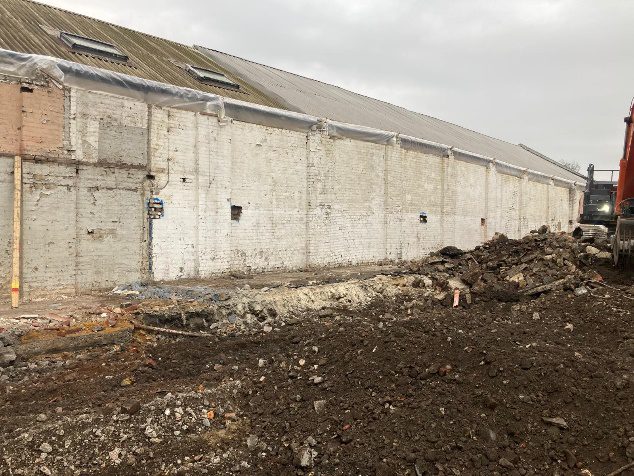
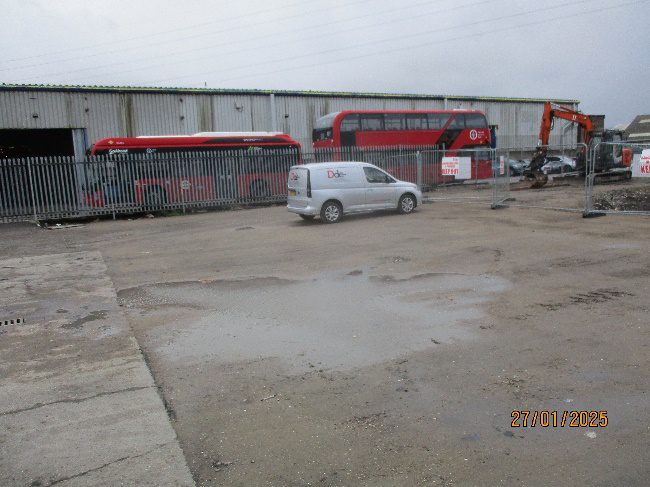
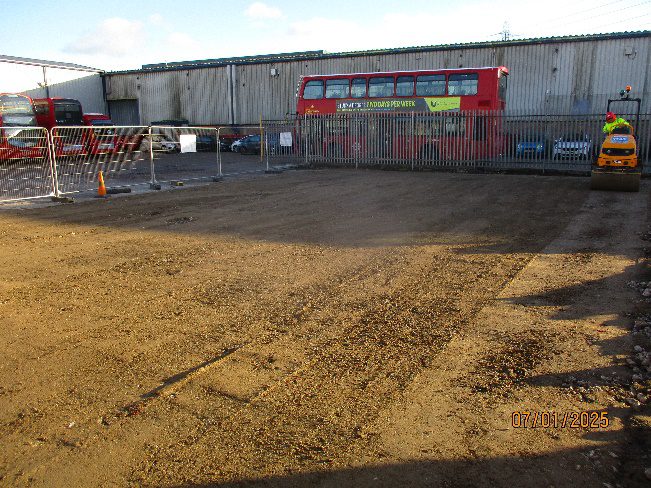
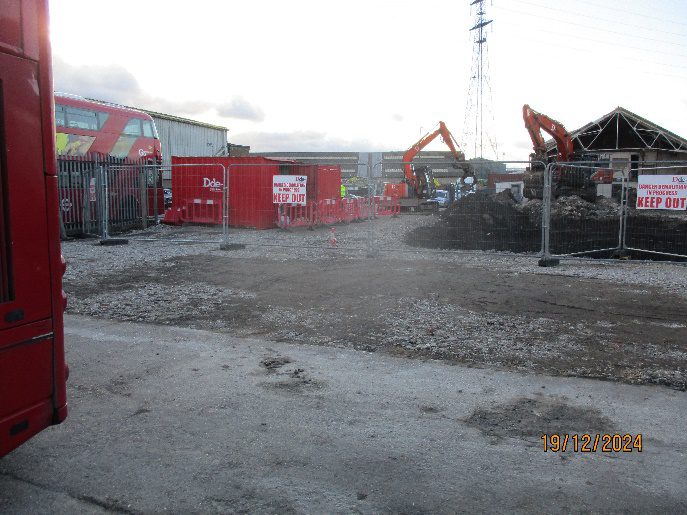
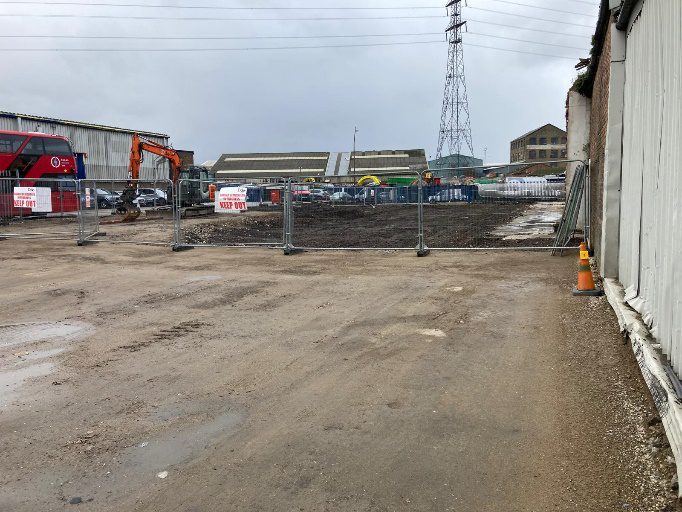
A well-functioning demolition supply chain ensured that resources were available when and where needed, enabling this project to progress smoothly and on schedule. Demolition was completed on time and within budget.
There were no accidents or incidents on site. Regular communication and prompt response actions resulted in excellent feedback from the client and bus depot.


